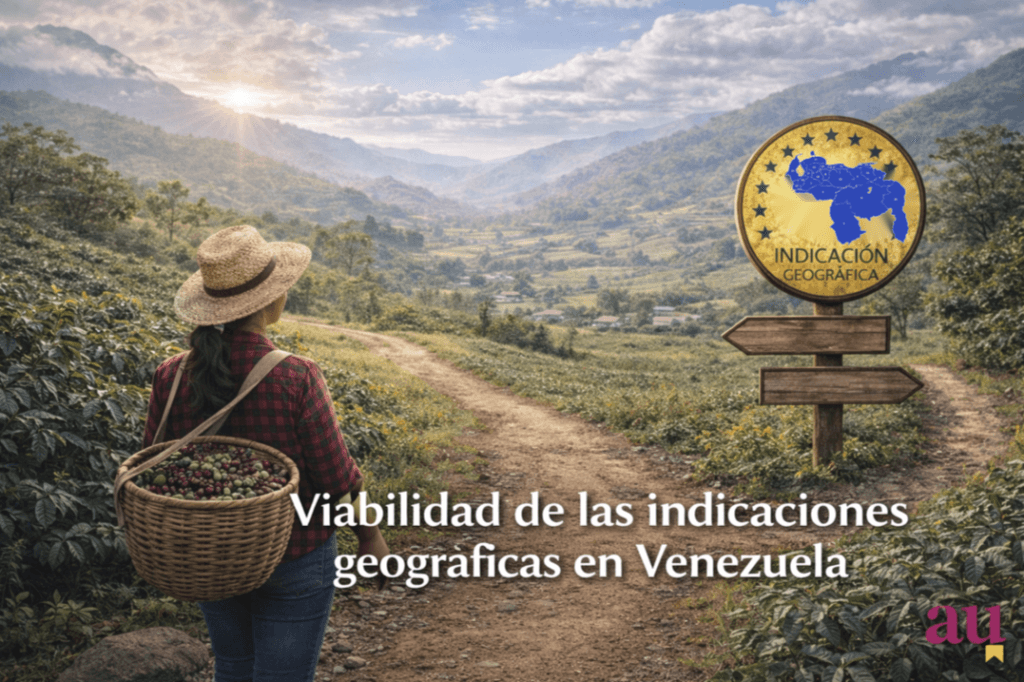
In a recent series of three articles published on my blog, I propose examining geographical indications in Venezuela through three questions that I consider decisive in assessing their real scope: whether recognition was viable from the outset, whether the sign can be sustained over time, and whether it succeeds in fulfilling an effective social function for the community and the territory linked to the product.
The first part focuses on viability prior to recognition. The central idea is that it is not enough to establish that a product is singular, traditional, or territorially linked. It is also necessary to ask whether, in the specific case at hand, the geographical indication is a truly suitable tool to operate in the market and within the territory. To that end, the analysis proposes six dimensions of viability: productive, territorial, reputational, organizational, economic, and strategic.
The second part addresses sustainability after recognition. A geographical indication does not remain alive simply because it has been granted. Its continuity requires social appropriation of the sign, transmission of the know-how associated with the product, a management structure, controls, traceability, productive continuity, economic valorization, and the capacity to activate lasting relationships among product, community, and territory. Within this framework, the text examines six dimensions of sustainability: social, cultural, institutional, productive, economic, and territorial.
The third part applies those two frameworks to the recent corpus of protected geographical indications recognized in Venezuela. Based on a review of the corresponding resolutions and technical materials, the text proposes a typology that distinguishes between potentially more robust cases, formally valid cases that nevertheless raise questions of effectiveness, cases whose post-recognition sustainability requires special follow-up, and cases that invite reflection on whether another intellectual property tool might better capture the product’s differential value.
Ultimately, the proposal is not limited to recording how many geographical indications have been recognized in Venezuela. It seeks to offer a more analytical and structured reading of the conditions that allow such recognitions to become living instruments of productive valorization and territorial development.
Full articles: